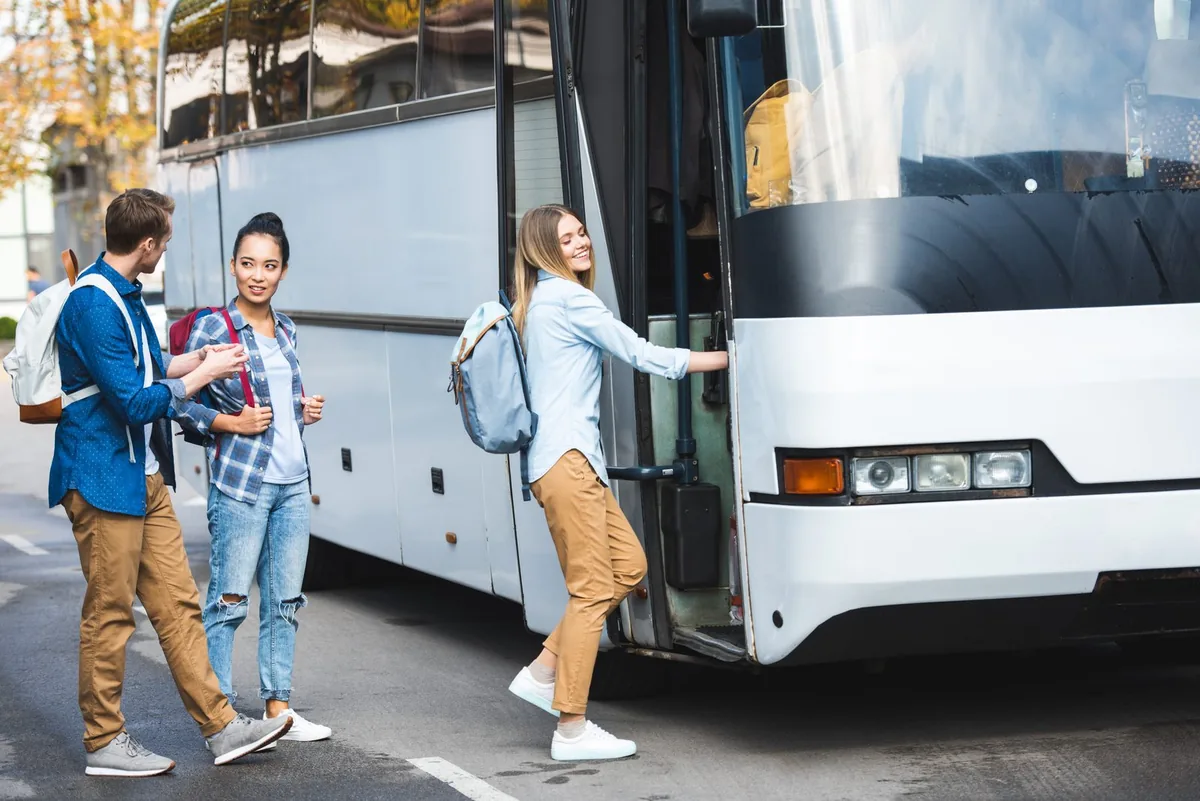
Confirm a seat for every traveller, the required vehicle arrangements and the complete day’s schedule. Keep supervision and visit approval with the responsible school team.
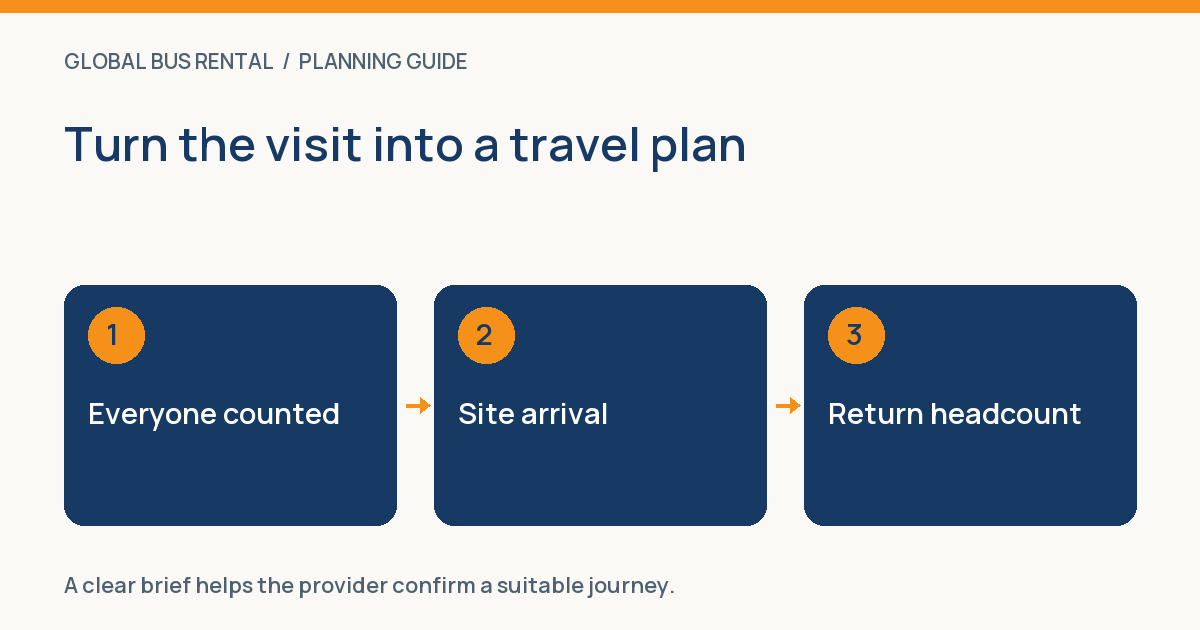
Start with the school’s visit process
Use the school’s educational visits policy and the appropriate internal approval route before committing to transport. In England, the Department for Education’s educational visits guidance addresses planning, risk assessment and checking external organisations. Schools elsewhere should use the guidance and procedures applicable to them.
A transport booking is one part of the visit. It does not replace the school’s decisions about supervision, medical needs, emergency arrangements or consent where required. Agree who owns those decisions and who communicates the resulting transport requirements.
Build a complete passenger and equipment brief
Count pupils, teachers, support staff and any other authorised travellers. Record the maximum number on each leg and provide a separate luggage list. Residential visits, music trips and sports fixtures often need more storage than a museum day with small bags.
Tell the provider about practical boarding and accessibility requirements through an appropriate private channel. Confirm seating and restraint arrangements for the specific vehicle and passengers rather than relying on a generic “school suitable” description. Have essential requirements written into the booking.
Ask the transport provider focused questions
- What vehicle capacity and configuration are being offered?
- How will the specified luggage and equipment be carried?
- What documentation does the school need for its supplier checks?
- How are vehicle substitutions and disruption handled?
- Which contact is available before travel and on the day?
- Does the proposed itinerary allow the required operating schedule?
Use the school’s procurement and safeguarding requirements to decide what evidence to request. Avoid substituting a website badge or a broad marketing statement for the checks your organisation actually requires.
Plan the time around the road journey
Give the provider any fixed admission or activity time, then include supervised boarding, loading and walking from the drop-off. At school, agree a loading location that works with other arrivals and departures. At the destination, identify the correct coach entrance and where the group can assemble.
For the return, work backwards from the intended school arrival but allow the operator to assess realistic timings. Tell families how updates will be communicated if the schedule changes. Do not give an exact arrival promise based solely on a car-route estimate.
Allocate responsibilities before departure
Nominate a visit leader who holds the final itinerary and provider contacts. Assign the school’s staff to supervision and headcount duties under its procedures. The driver’s transport role should be distinct from responsibility for supervising pupils.
Check the group before leaving each location and make sure staff know the agreed return meeting point. Keep emergency and medical information available to authorised staff without distributing it through general passenger messages.
Prepare for a delay or changed plan
Agree who can authorise a route change and how the school will communicate with the provider. If an activity overruns, notify the contact promptly rather than assuming the return can slide indefinitely. The revised plan still needs to work for the vehicle and driver.
Have a suitable procedure for a missed departure, an unwell pupil or a disrupted visit, consistent with the school’s policy. Discuss transport implications before travel where a foreseeable need could affect the vehicle or itinerary.
Choose the appropriate transport enquiry
Our school transport service can assess the route and requirements, subject to availability and quotation. A small visit may suit minibus hire, while a larger party may need coach hire. Use the general booking checklist alongside, rather than instead of, the school’s own visit documentation.
Example: a class visit with accompanying adults
A class has 30 pupils, four staff and two accompanying adults, so the enquiry starts with 36 passengers. Add lunch bags, teaching materials and any mobility equipment. Give the provider the school's agreed loading point, the venue entrance and the time the group needs to be ready for admission. Ask the school lead to confirm the applicable supervision and restraint requirements for the journey. Before the return, use the agreed passenger check and contact process so a change in the group can be resolved before departure.
Continue with school trip coach and minibus planning.
Planning questions
Does the driver count towards our supervising staff?
Treat transport and pupil supervision as separate roles. The school should arrange supervision through its own educational visits procedures and clarify responsibilities before booking.
What should a school confirm about vehicle safety?
Apply the school’s supplier-check process and request the relevant evidence. Confirm the actual passenger capacity, required seating and restraints, accessibility arrangements and disruption procedures for the proposed booking.
Can we use the same brief for a residential visit?
Use the same planning approach, but include the larger luggage inventory, every overnight location and the full itinerary. The operator needs to assess the complete service rather than a day-trip assumption.
Turn the plan into a quote.
Share your route, dates and group size. We’ll check availability for your itinerary.