
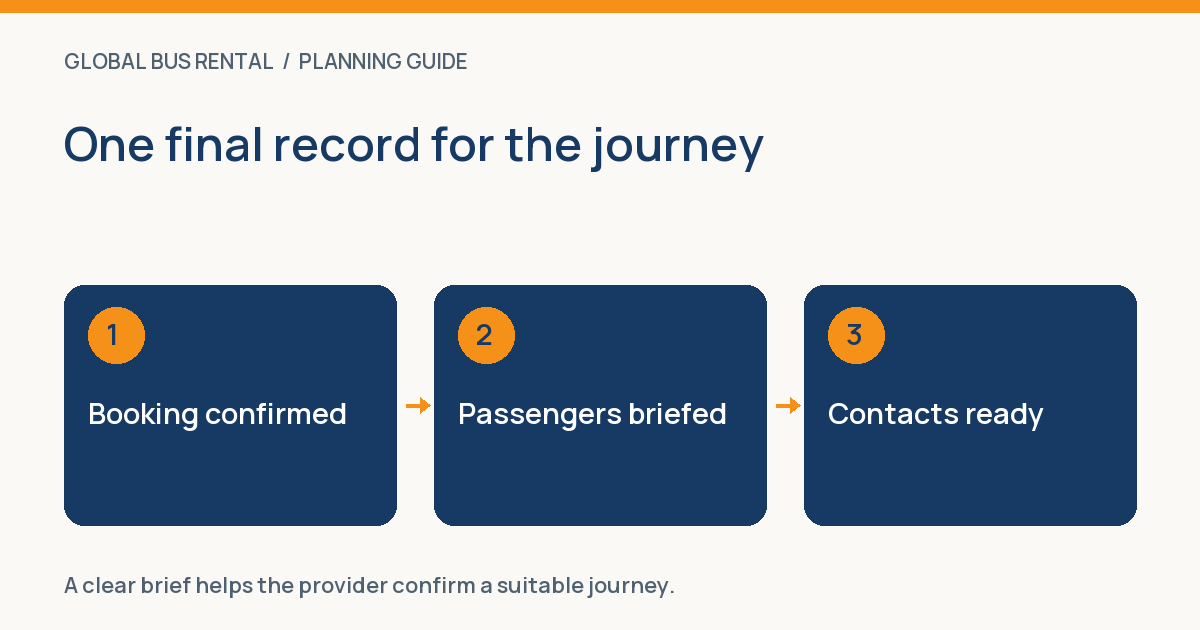
Keep the accepted quote, final itinerary and contact details together. One organiser should own updates, with a deputy who can access the same information.
1. Check the booking record
Match the booking reference, date, lead contact and itinerary against the provider’s written confirmation. Review the total payable, payment deadlines and terms. If your organisation needs an invoice reference or purchase order, resolve it before the deadline rather than on travel day.
Confirm the vehicle requirements you actually accepted. A request for a facility is not the same as written confirmation that it will be supplied. Mark essential items separately from preferences and ask about anything that remains ambiguous.
2. Confirm people, bags and boarding needs
- Maximum passenger count on every leg, including staff and children.
- Large cases, cabin bags and shared equipment.
- Agreed accessibility arrangements and additional boarding time.
- Any agreed child-seat or other restraint requirements.
- The process for changes after the final headcount deadline.
Check the list with the person who knows the group, not just the person who pays the invoice. Sports kit, pushchairs and mobility equipment are easy to omit when an enquiry starts as a simple headcount.
3. Walk through the itinerary on paper
For each stop, record the correct address, entrance, passenger-ready time and intended departure. Add the arrival deadline where it matters. Ask the venue to identify coach loading and parking arrangements, then have the operator assess the proposed plan.
Read the itinerary in both directions. Outward instructions are often detailed while the return says only “after the event”. Replace that with a meeting point, a meeting time and a departure time. Identify what the group should do if the event finishes late.
Check the local end of a Canadian arrival
For a stay in Winnipeg, use the local arrival brief to check the booked airport against the hotel address, then record the return separately. For Halifax, use its own airport references and Nova Scotia destination details rather than carrying over the pickup instructions from another Canadian stop. If a programme includes several provinces, make a separate checklist for each local duty and record the travel connecting them.
4. Agree travel-day communications
Nominate a lead organiser and deputy. Confirm how driver details will be issued and which provider number handles changes or delays. Keep the lead phone charged and reachable; a driver should not have to contact a passenger who has no authority to change the plan.
Share the final passenger message below. For large events, include a vehicle or group identifier so people join the right departure. Avoid circulating personal booking information or a full passenger list more widely than necessary.
Passenger message template
Travel date: [date]
Meet at: [exact entrance or agreed point]
Ready to board: [time]
Depart: [time]
Luggage: [confirmed allowance for this booking]
Return meeting point and time: [details]
Group contact: [name and phone]
If delayed: contact the group organiser immediately.
5. Prepare for a change without rewriting the trip
Ask how late passengers, flight changes, venue closures or a vehicle substitution would be handled. You do not need to predict every incident, but you do need a contact and an approval process. Keep essential vehicle requirements visible if an alternative vehicle is discussed.
For a school or club, follow the organisation’s own supervision and emergency procedures. Private transport does not replace those responsibilities. Keep any necessary confidential information available to the appropriate group leader through a suitable secure arrangement.
6. On boarding and return
Check the group against your list, keep boarding areas clear and make sure luggage is accounted for. Remind passengers of the return arrangements before they disperse. If the group divides at the destination, make sure each subgroup knows who is responsible for bringing it back.
After the final drop-off, ask travellers to check seats and storage areas for belongings without obstructing the driver’s work. Report any problem through the provider’s agreed contact and keep the booking reference available.
Use the right guide for unresolved details
If prices remain unclear, use the quote comparison sheet. If seating or storage is uncertain, read the vehicle comparison. For a new journey, our bus hire service can assess the full brief subject to availability and quotation.
Example: the final check before a group day out
The booking is for 28 people, but the final list now contains 29. One passenger also brings a folding mobility aid that was not included in the enquiry. Contact the provider before travel to confirm the extra place and storage. Update the shared itinerary only when those requirements have been accepted. Then send one passenger message containing the date, exact meeting point, ready-to-board time, return details and organiser's number. A final comparison of that message with the booking confirmation catches differences before the coach arrives.
Continue with send the complete journey details.
Booking questions
When should we send the final passenger message?
Send it once the itinerary has been agreed with the provider, allowing enough time for travellers to raise access or luggage questions. Reissue one clear version if a confirmed detail changes.
Who should hold the booking paperwork?
The lead organiser and a nominated deputy should be able to access the same final confirmation, itinerary and contacts. Keep personal passenger information limited to those who need it.
What is the most useful return-trip detail to confirm?
A precise meeting point and departure time. Also agree how a late-running event will be communicated to the provider so passengers do not make conflicting arrangements.
Turn the plan into a quote.
Share your route, dates and group size. We’ll check availability for your itinerary.