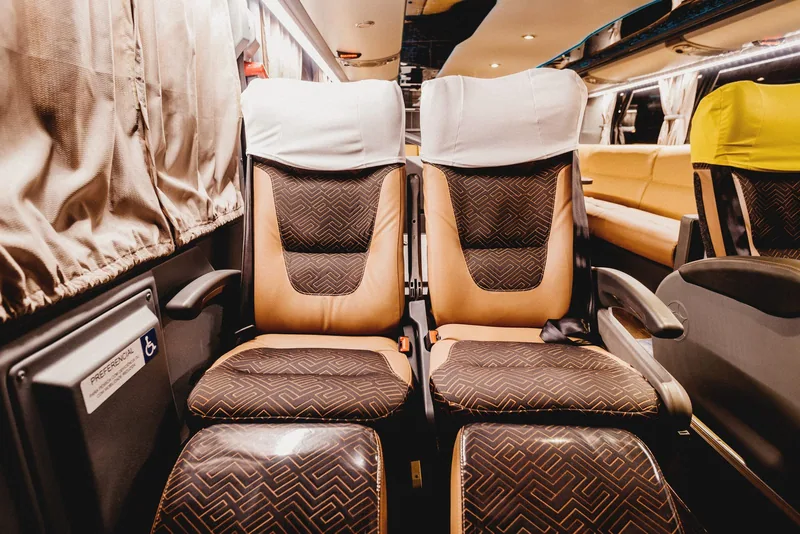
Agree the complete journey with the traveller and operator: boarding, travel position, equipment, assistance and access at both ends. Confirm the specific vehicle configuration in writing.
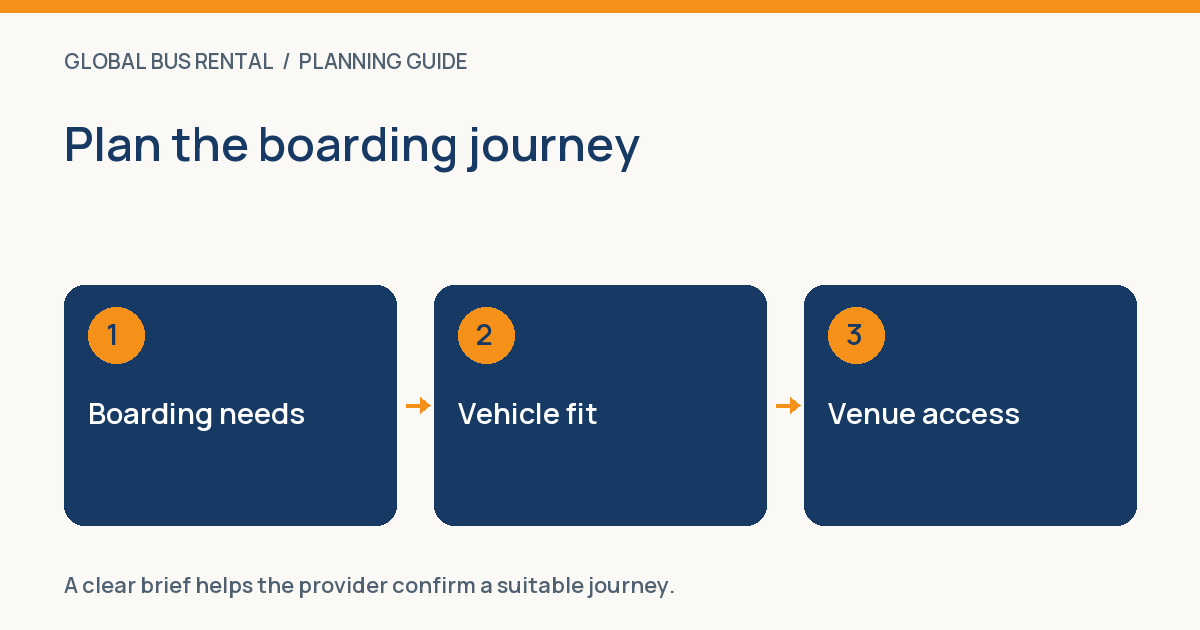
Ask about the journey, not a diagnosis
Discuss what the traveller needs to make the trip work. Can they use steps, or is a lift or ramp needed? Will they remain in their wheelchair during travel or transfer to a vehicle seat? Is extra time needed for boarding? Share practical requirements through an appropriate private channel.
A traveller may also need support that is not visible, such as clear boarding instructions or a quieter waiting arrangement. Ask about preferences without making assumptions. Only share personal information needed to arrange the transport with those responsible for it.
Confirm the wheelchair and vehicle arrangement
Where wheelchair travel is required, give the operator the relevant equipment dimensions and other specifications it requests to assess compatibility. Ask it to confirm the boarding equipment, travel space and securement arrangements for that wheelchair and passenger.
Also confirm how the accessible configuration affects the remaining passenger seats and luggage storage. A vehicle’s maximum advertised capacity may describe a different layout. Mobility scooters and wheelchairs are not interchangeable categories; specify the actual equipment rather than using a broad label.
Check these points before accepting a quote
- The exact boarding method and whether it suits the traveller’s needs.
- The agreed position and arrangement during the journey.
- Space for accompanying passengers, assistance dogs and equipment as relevant.
- Who provides each type of assistance and what limits apply.
- The available passenger seats and baggage space in that configuration.
- How equivalent requirements would be met if the vehicle changes.
Do not plan around informal lifting of a passenger or heavy equipment. Ask the provider to describe a suitable, agreed boarding process. If the proposed option does not meet an essential requirement, resolve it before confirming the booking.
Understand the limits of generic accessibility claims
UK accessibility rules vary by service and vehicle. The Department for Transport’s bus and coach accessibility guide explains that the rules it describes have exclusions, including private hire services that do not run to a timetable. Do not assume every private hire coach must have the same equipment as a scheduled accessible service.
For your booking, the practical requirement is a confirmed suitable vehicle and assistance arrangement. For travel outside Great Britain, ask about the arrangements applicable to that location rather than extending UK guidance worldwide.
Check the route beyond the vehicle
Ask the pickup and destination venues about surfaces, gradients, kerbs, steps and the route to the entrance. A suitable vehicle does not solve an inaccessible path between its loading point and the building. Share entrance information with the operator and traveller before finalising the plan.
Confirm there is appropriate space for the proposed boarding equipment to operate. A loading area that fits the vehicle may still be unsuitable for deploying a lift or ramp. Let the operator assess the actual arrangement rather than relying only on an address.
Build a realistic schedule and contingency
Allow the provider to include the agreed boarding time and any necessary stops. If the trip is long, discuss comfort and facilities with the traveller; an onboard toilet should not be assumed available or suitable. Identify an appropriate stop plan where required.
Keep the confirmed requirements with the booking record and ask how a disruption or substitution would be handled. A replacement described as “the same size” may not meet the same accessibility needs.
Request a suitability assessment
Contact our minibus hire or coach hire service with your route and practical requirements. Accessible options require specific availability and suitability confirmation; this guide is not a promise of a particular vehicle in every destination. The booking checklist helps keep the agreed arrangements visible through to departure.
Example: two wheelchair users in one group
A group of 18 includes two passengers who need to remain in their wheelchairs. The organiser supplies each wheelchair's dimensions and combined occupied weight, describes the boarding assistance needed and lists the remaining seats. The provider can then confirm the offered vehicle's lift, wheelchair positions and restraint arrangements against those requirements. The venue must also confirm a usable route from the agreed loading point to the entrance. Keep both confirmations with the booking: an accessible vehicle alone does not resolve a difficult path at the destination.
Continue with coach hire requirements.
Vehicle questions
Does every private hire coach have a wheelchair lift?
No. Confirm the actual vehicle and boarding arrangement offered. Generic vehicle categories and photographs do not establish that a lift or suitable wheelchair travel space is available.
Can an accessible layout change the number of passenger seats?
Yes, depending on the vehicle configuration. Ask for the confirmed seating and luggage capacity with the required wheelchair space or other arrangements in place.
What should happen if the allocated vehicle changes?
The provider should reassess the replacement against the essential requirements recorded in your booking. Confirm suitability before accepting an alternative described only as similar in size.
Turn the plan into a quote.
Share your route, dates and group size. We’ll check availability for your itinerary.