Collect the details before flying
Give your organiser the flight number, arrival date, passenger count and contact for each arrival group. State whether everybody has checked bags. A group on several flights should agree in advance what happens when one arrives earlier or later; a shared collection and several separate transfers are different bookings.
Keep the final hotel or venue address in the same travel record. Include the entrance where the group needs to arrive and any time-critical appointment. A named address makes it possible to discuss the actual onward journey instead of assuming that every destination described as Amsterdam has the same access.
Distinguish the vehicle’s collection process
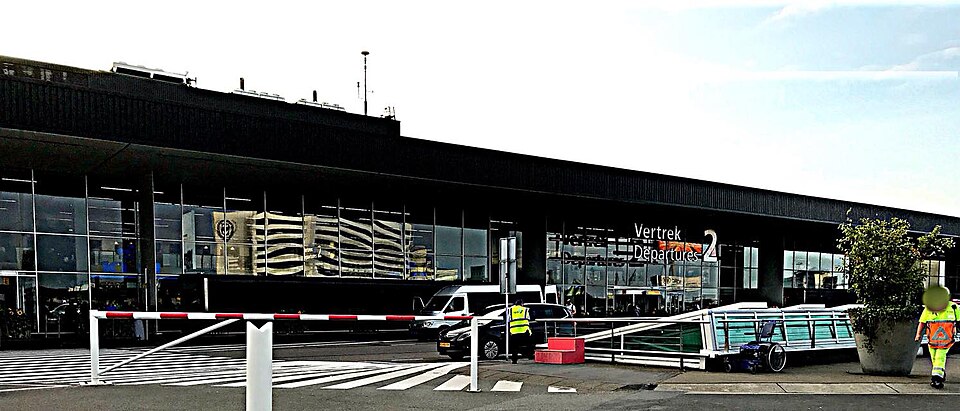
Schiphol publishes separate instructions for coaches and for passengers using private-car pickup facilities. Its coach guidance identifies access conditions for the designated stops and directs coach drop-offs to the Arrivals Passage on Koepelstraat. Ask your operator which instructions apply to the vehicle in your booking.
Use the confirmed collection point rather than heading automatically to a private-car meeting area. Keep the group inside together until the organiser knows where the vehicle will load. A stop sign, a parking area and an arrivals meeting point are different parts of the journey; the written plan should connect them clearly.
Compare rail and a reserved vehicle
Schiphol’s transport information covers rail, bus and road options. Compare them against your final address, the number of bags and how much independent travel the group wants. A journey with a transfer may suit a small, confident party but be less convenient for a group trying to remain together.
For a reserved vehicle, ask about the legal stopping point at the destination and the walk to the entrance. Explain anything bulky or awkward to carry. Before choosing, consider the complete movement from baggage collection to the accommodation, rather than looking only at the travel leg between the airport and the city.
Make the readiness message useful
Count people and bags, check whether anyone is still resolving an arrival issue and tell the lead organiser when everybody is ready. Keep one communication channel with the driver or dispatch contact. A clear final update helps the operator coordinate collection without receiving contradictory departure requests.
Plan for children, slower walking speeds and anyone needing assistance. Agree whether passengers can move independently or must stay with a leader during the walk to the vehicle. Keep the booking name available and write down the backup contact rather than relying on the phone of one travelling organiser.
Protect the rest of the itinerary
Leave flexibility between arrival and your first timed activity. Group hotel check-in, unpacking and a meal can all take time after the transfer has finished. If an event deadline cannot move, explain it when requesting transport so the booking team can assess the intended arrival plan.
Confirm the return flight details and collection address separately. Include any additional hotel stops and allow for loading before departure. Ask how waiting, airport access costs and changes are handled in the quotation. Use current airport and airline information to choose a travel-day schedule instead of promising a universal journey time.
Plan your group transport
Share your travel date, route, passenger numbers and luggage needs with the booking team. Vehicle availability and the journey price are confirmed through an individual quotation.
Plan with current information
Use the official sources below for current visitor arrangements, tickets and airport instructions before you travel.